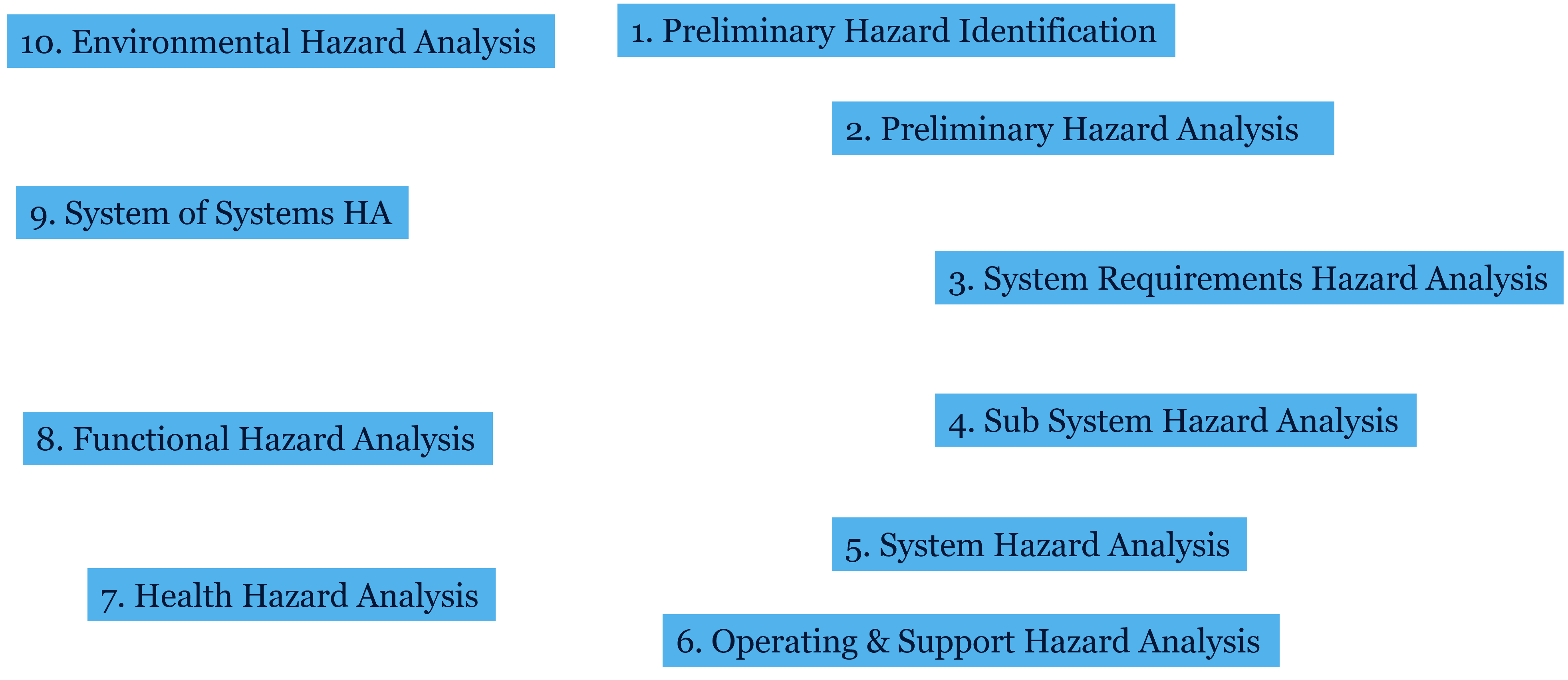
In this ‘Introduction to System Safety Risk Assessment’, we will pull together several key ideas.
First, we’ll talk about System Safety. This is safety engineering done in a Systems Engineering Framework. We are doing safety within a rigorous process.
Second, we’re talking about Risk Assessment. This is a term for putting together different activities within another process. This process may be basic, or it might be quite sophisticated, as illustrated, below.
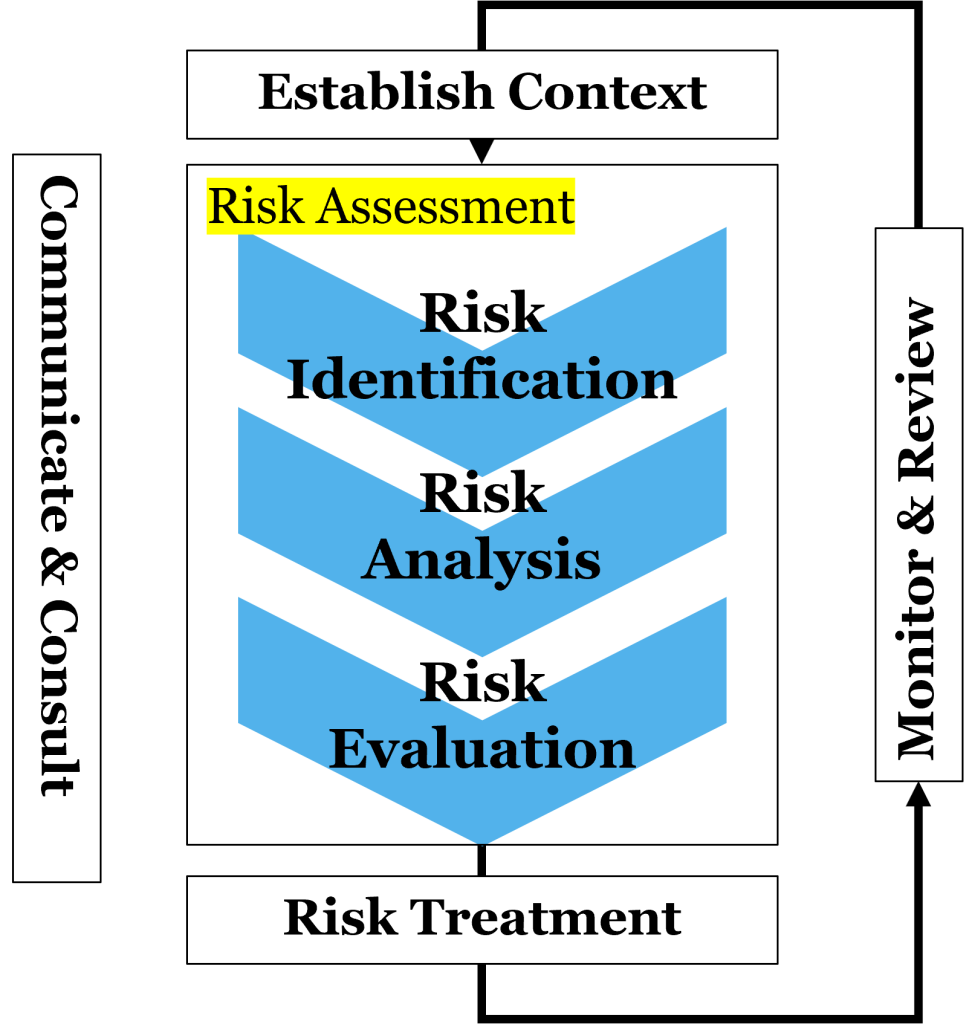
Third, and finally, we will put all this together into a System Safety Program. This is hinted at in the diagram, above, but a real system safety program needs to do a lot more than this. It needs to tie into the project it supports, to systems engineering, to resources, quality, V&V, etc. Designing such a program is complex, so we typically follow a standard, like Mil-Std-882E.
You can hear more about this in the introductory video, below.
This post is part of a series:
This Post is the Intro to the System Safety Risk Assessment Programs Course.
Transcript:
Introduction
Hello,
Welcome to this course on Systems Safety Risk Analysis Programs. I’m Simon Di Nucci, The Safety Artisan, and I’ve been a safety engineer and consultant for over 20 years. I’ve worked on a wide range of safety programs doing risk analysis on all kinds of things. Ships, planes, trains, air traffic management systems, software systems, you name it.
I’ve worked in the U.K., in Australia, and on many systems from the U.S. I’ve also spent hundreds of hours training hundreds of people on safety. And now I’ve got the opportunity to share some of that knowledge with you online.
So, what are the benefits of this course?
First of all, you will learn about basic concepts. About system safety, what it is and what it does. You will know how to apply a risk analysis program to a very complex system and how to manage that complexity. So, that’s what you’ll know.
At the end of the course, you will also be able to do things that you might not have been able to do before. You will be able to take the elements of a risk analysis program and the different tasks. You can select the right tasks and form a program to suit your application, whatever it might be. Whether you might:
Have a full, high-risk bespoke development system,
Be taking a commercial system off the shelf and doing something new with it, or
Take a product and use it in a new application or a new location.
Whatever it might be, you will learn how to tailor your risk analysis program. This program will give you the analyses you need. And to meet your legal and regulatory requirements. Once you’ve learned how to do this, you can apply it to almost any system.
Finally, you will feel confident doing this. I will be interpreting the terminology used in the tasks and applying my experience. So, instead of reading the standard and being unsure of your interpretation, you can be sure of what you need to do. Also, I will show you how you can get good results and avoid some of the pitfalls.
These are the three benefits of the Course
You will know what to do.
You will be able to perform risk program tasks, and
You’ll feel confident doing those tasks.
At the end of the course, I will also show you where to find further resources. There are free resources to choose from. But there are also paid resources for those who want to take your studies to the next level. I hope you enjoy the course.
This is Module 1 of SSRAP
This is Module 1 from the System Safety Risk Assessment Program (SSRAP) Course. Risk Analysis Programs – Design a System Safety Program for any system in any application.
The full course comprises 15 lessons and 1.5 hours of video content, plus resources. It’s on pre-sale at HALF PRICE until September 1st, 2024. Check out all the free preview videos here and order using the coupon “Pre-order-Half-Price-SSRAP”. But don’t leave it too long because there are only 100 half-price courses available!
Meet the Author
Learn safety engineering with me, an industry professional with 25 years of experience, I have:
•Worked on aircraft, ships, submarines, ATMS, trains, and software;
•Tiny programs to some of the biggest (Eurofighter, Future Submarine);
•In the UK and Australia, on US and European programs;
•Taught safety to hundreds of people in the classroom, and thousands online;
•Presented on safety topics at several international conferences.